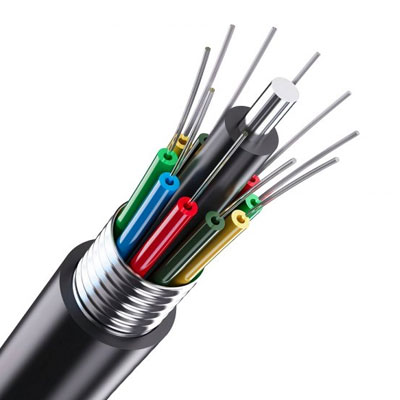
Optical Fiber Cable
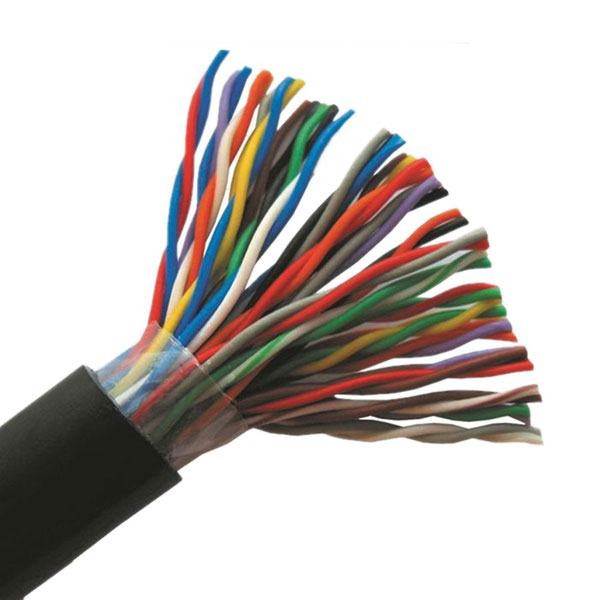
Jelly Filled Cable
Range of High Quality Telecommunication Cables
We offers a complete range of high quality Telecommunication Cables, including Optical Fibre Cables for telecommunications, Direct to Home Optical Fibre Cables for cable TV, Polythene Insulated Jelly Filled Cables and Aerial Self Supporting Cables for subscriber distribution networks.
Optical Fiber
The passive infrastructure in any fiber optic network is a long-term investment. It needs to be built on scalable and future-proof technology that is optimized in terms of capacity, quality and operational expenditure.
When you are building a network that requires long distances, high speeds, and/or heavy bandwidth connections, there is no question: fiber optic cables win the day.
We offers a wide range of Optical Fibre Cables (Single Mode and Multi Mode) including Armoured Aerial, Un-armoured, All Dielectric Self Supporting Optical Fibre Cables and Optical Fibre Direct to Home Cables. Cables offered conform to IEC-794, ITU-T, TC-55-2000 specifications.
Configuration
Unitube, Multitube, Tight Buffer Ribbon Type.
Fibre
Single mode, Multi mode, primary coated with double UV cured acrylate.
No. of Fibers in a Cable
2, 6, 12, 24, 48, 96, 144 and other sizes
Jelly Filled Cables
Jelly Filled Polythene Insulated Jelly Filled cables (PIJF) also known as Jelly Filled Telephone Cables (JFTC) are used as feeder and distribution cables for connection between exchanges and subscribers. The range offered is single pair upto 400 pairs of different sizes likes 05mm, 0.63mm & 0.9mm. These cables can be laid in ducts or directly buried. Our offered Jelly Filled Cables conform to standard specifications such as DOT specification no. GICUG-01102 February 1996, BS 3573, IEC708-1, CW 1128A, IRS-TCI41. Type approved by Department of Telecommunications, Government of India.
Configuration
Twisted Pairs or Star Quads
Conductor
Solid annealed, bare copper wire of 0.5, 0.63 or 0.9mm and other sizes
Insulation
Solid MDPE or HDPE, fully colour coded. Foam skin insulation as per requirement.
Fiber Cable or Copper Cable
Both cable types transmit data, but in very different ways. Copper carries electrical pulses along its metal strands. Fiber optics, on the other hand, carry pulses of light along flexible glass threads. This difference often equates to fiber being the best solution for a new or upgraded network, and therefore being worth the heavier up-front investment.
5 Reasons IT Pros Choose Fiber Optic Cables
1. Fiber optic transmission is faster
2. Fiber optic transmission can cover greater distances
3. Fiber optic cables are impervious to electromagnetic interference (EMI)
4. Save space and enhance cable management
5. Fiber optics are future-proof
Optical Fiber Cable
Jelly Filled Cable